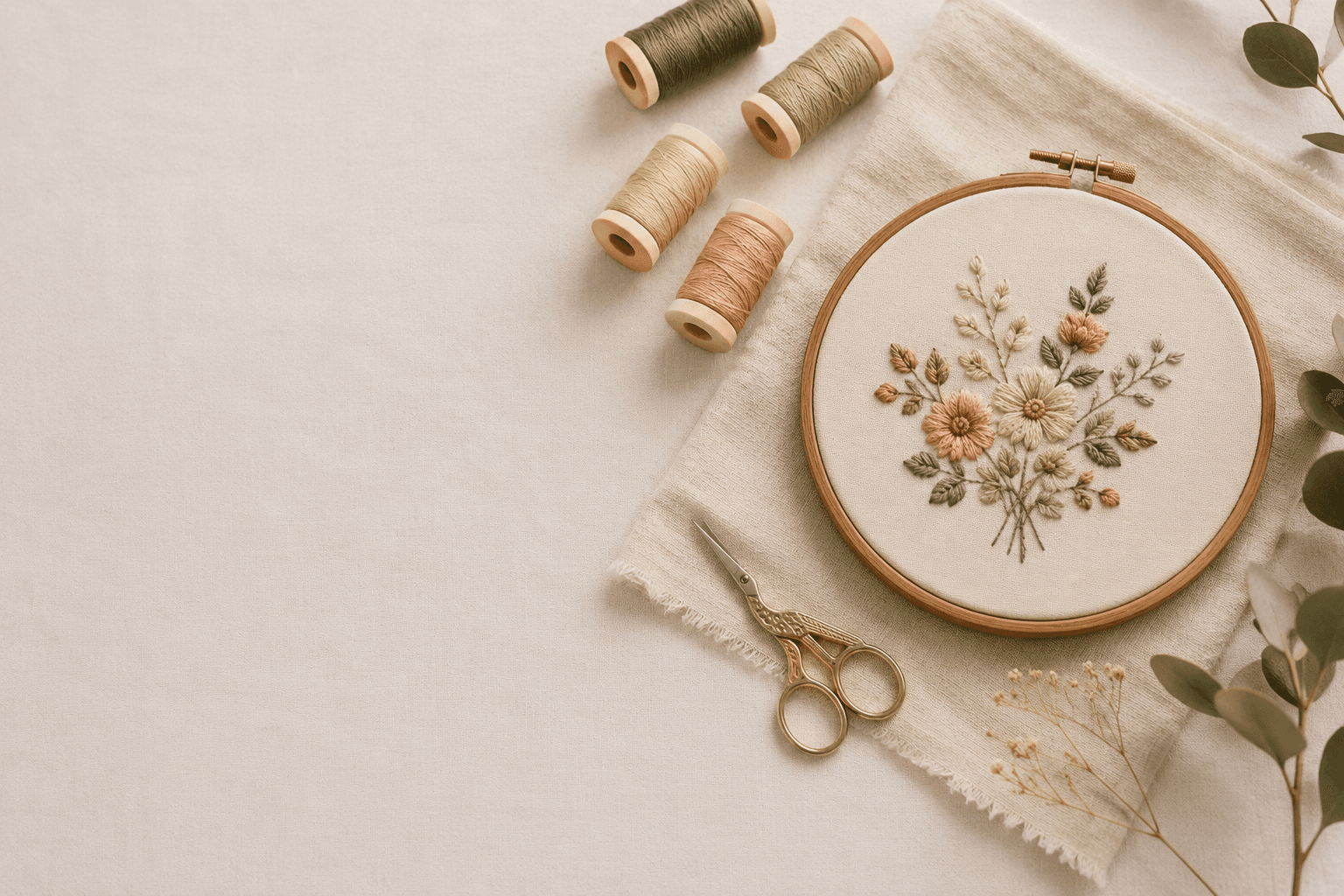
Machine embroidery is a wonderfully rewarding craft. It lets you personalize clothing, accessories and home décor with your own stitched designs. Beginners often wonder where to start — but the good news is, you don't need a huge investment to begin. Even an entry-level machine can produce beautiful results. As you get started, focus on the basics and enjoy creating something unique for your family or friends.
Choosing Your First Machine
A common question is which machine to buy first. Look for a friendly beginner model from brands like Brother, Janome or Singer. These often have built-in designs and USB connectivity. The most important factors are hoop size and ease of use. For beginners, a 100×100 mm (4×4") hoop is very useful — it can handle small logos, monograms and towel designs without a lot of fuss. You'll also want a machine that supports common file formats (Brother uses .PES, Janome uses .JEF, etc.). Always check that your machine can read the embroidery file formats you intend to use. Start simple and reliable — you can always upgrade later.
Essential Supplies You'll Need
Beyond the machine itself, there are a few must-have supplies. A starter kit should include specialty threads, needles, stabilizers and basic tools. You'll need machine embroidery threads (both needle/top thread and bobbin thread), embroidery needles, and stabilizers (tear-away, cut-away and wash-away film). You'll also want a temporary spray adhesive and some basic extras: sharp scissors, straight pins, an iron or pressing tool, a fabric marking pen, and a computer or USB stick to transfer designs.
Choose high-quality machine embroidery thread (usually 40-weight polyester or rayon) — it's designed to handle high-speed stitching. Avoid using regular sewing thread; it tends to break and causes poor stitch quality. Machine embroidery needles (sizes 75/11 or 80/12) have larger eyes to accommodate thicker embroidery thread. Start with basic thread colors and basic stabilizers, then build your collection as you take on new projects.
Understanding Design Files
Embroidery designs come in digital files that guide your machine's stitching. Each brand uses specific formats, so be sure any design you buy matches your machine. Brother machines read .PES files, Janome reads .JEF. Always check file formats as part of your machine choice. Many stitchers recommend downloading a sample design and doing a test run first: copy the embroidery file onto your USB and let the machine stitch it out. This prevents surprises and ensures compatibility.
Your First Stitch-Out: Tips for Success
Before embroidering on your final project, always do a test stitch-out on a similar scrap fabric with matching stabilizer. Hoop a piece of cotton with medium-weight tear-away stabilizer, and stitch a small design or monogram. Use regular polyester embroidery thread and a new needle. Watch the first few stitches — if the hoop is too loose or the stabilizer is wrong, you'll see it immediately. After stitching, check both sides of the fabric and write down what worked well and what didn't.
Key beginner tips: use stabilizer every time (skipping it causes puckering), use the right stabilizer for your fabric, don't use ordinary sewing thread, always align and tension your hoop evenly, and make sure your design fits inside your hoop size. Start with simple projects like cotton hand towels, napkins, or small garments. Each stitch-out will teach you something new.
Conclusion
Embroidery is a learning process. Begin with modest projects, test everything on scraps, and take notes on tension, thread and stabilizer choices. With patience and practice, machine embroidery becomes second nature. In no time, you'll be creating beautiful personalized items and mastering more advanced techniques.
Ready to start stitching? Browse our shop to find beginner-friendly patterns. Share your first projects with us — we can't wait to see what you create!